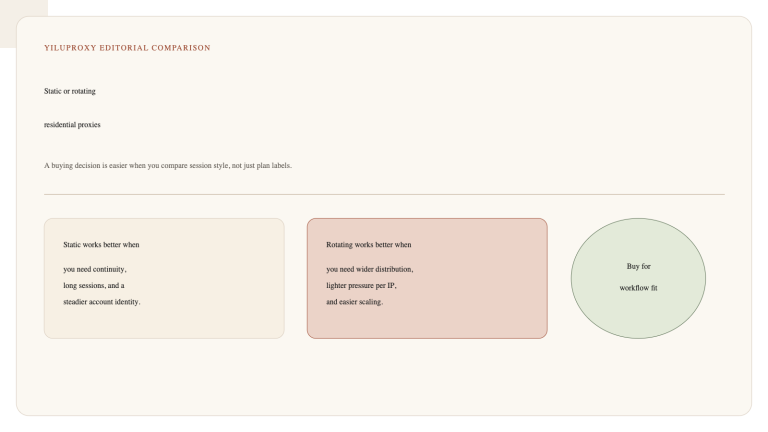
When Mobile Proxies Make More Sense Than Residential Proxies
If you are choosing between mobile proxies and residential proxies, the better option usually depends on how sensitive your workflow is to network identity. Residential proxies are often the default recommendation because they are easier to understand and usually easier to price. But there are situations where mobile proxies are the more practical choice, especially when your target platform pays closer attention to carrier-grade traffic patterns, changing network conditions, and real mobile-origin behavior.
In simple terms, mobile proxies usually make more sense when you need a connection profile that blends into mobile traffic more naturally, when account workflows are exposed to stricter trust checks, or when your tasks benefit from periodic IP refresh tied to mobile network behavior. Residential proxies still make more sense for many buying teams, especially when they want broader location coverage, simpler scaling, and a more straightforward cost structure.
If you are still comparing plans, it helps to review residential proxy options alongside rotating proxy plans before you decide which traffic model fits your workflow better. If you need a broader overview of YiluProxy’s network and use cases, the main proxy service overview is a useful starting point.
What makes mobile proxies different from residential proxies
Residential proxies route traffic through home-user IP space. Mobile proxies route traffic through mobile carrier networks. That difference sounds small, but in practice it changes how your traffic is interpreted by many platforms. Mobile traffic often comes from shared carrier NAT environments, more dynamic session conditions, and connection patterns that look different from fixed home broadband behavior.
This does not mean mobile proxies automatically outperform residential proxies. It means they solve a different trust and session problem. A buyer who ignores that distinction can end up paying for the wrong kind of stability.
- Residential proxies: often easier for broad market coverage and standard account or browsing workflows.
- Mobile proxies: often stronger when mobile-origin trust signals matter more than fixed-home consistency.
- Residential proxies: usually simpler when you need predictable scaling across many regions.
- Mobile proxies: often better when your workflow benefits from carrier-style rotation and mobile network realism.
When mobile proxies make more sense
Mobile proxies are usually the better fit when your task is sensitive to the quality of the network environment rather than just the fact that the IP looks residential. Some platforms are more comfortable with traffic that resembles ordinary mobile usage because mobile networks naturally include IP sharing, movement, and session turnover.
- Mobile-first platforms: when the platform heavily overlaps with app behavior or mobile-user traffic patterns.
- High-friction account environments: when identity checks are stricter and broadband-style sessions trigger more friction than expected.
- Workflows that benefit from natural IP refresh: when rotating through carrier-origin traffic is more useful than holding one home IP.
- Testing mobile user experience: when you want the network path to reflect what mobile users actually look like.
In those situations, paying more for mobile proxies can still be cheaper in practice if it reduces retries, re-logins, additional warm-up work, or manual intervention.
When residential proxies still make more sense
Residential proxies remain the better option for many teams because they are more flexible across common buying scenarios. If your workflow does not need mobile-origin trust specifically, residential resources often give you a better balance of coverage, availability, and operating simplicity.
- Wider location targeting: often easier when you need more countries, cities, or inventory depth.
- General research and monitoring: useful when mobile-specific trust is not the main variable.
- Cost control: often more predictable for teams managing multiple ongoing projects.
- Simpler scaling: practical when you want to grow without depending on narrower mobile supply.
That is why residential proxies are still the safer starting point for many buyers. The mistake is not choosing residential proxies. The mistake is assuming they are the best fit for every account-sensitive or mobile-heavy task.
How to tell if your problem is trust quality or traffic quantity
A fast way to decide between mobile proxies and residential proxies is to ask whether your main problem is traffic pressure or trust pressure.
- Traffic pressure means you mainly need enough clean IPs, enough locations, and enough throughput to run the workflow.
- Trust pressure means your sessions struggle because the platform is sensitive to how the connection environment looks, not just how many IPs you have.
If traffic pressure is the main issue, residential proxies are often enough. If trust pressure is the real bottleneck, mobile proxies may solve the problem more directly.
This is also why teams sometimes misdiagnose performance. They keep buying larger residential pools when the real issue is that their target reacts better to mobile-origin traffic patterns than to fixed-home style sessions.
What buyers often overlook before choosing mobile proxies
The most common mistake is treating mobile proxies as an upgrade tier instead of a specialized tool. A mobile proxy is not automatically better just because it costs more. It becomes better only when the workflow actually benefits from carrier-grade traffic behavior.
- They compare price only and ignore how much retry cost the workflow is generating.
- They assume residential and mobile are interchangeable because both look closer to real-user traffic than datacenter IPs.
- They buy mobile for every task even when a broader residential pool would scale more efficiently.
- They buy residential by habit even when account friction points suggest a mobile-origin environment would fit better.
YiluProxy usually makes more sense for buyers who compare the session model first, then price, then scaling path. That order prevents a lot of wasted spend. In practice, YiluProxy is easiest to evaluate when you map the proxy type to the exact trust problem you are trying to solve instead of assuming the most expensive network will always perform best.
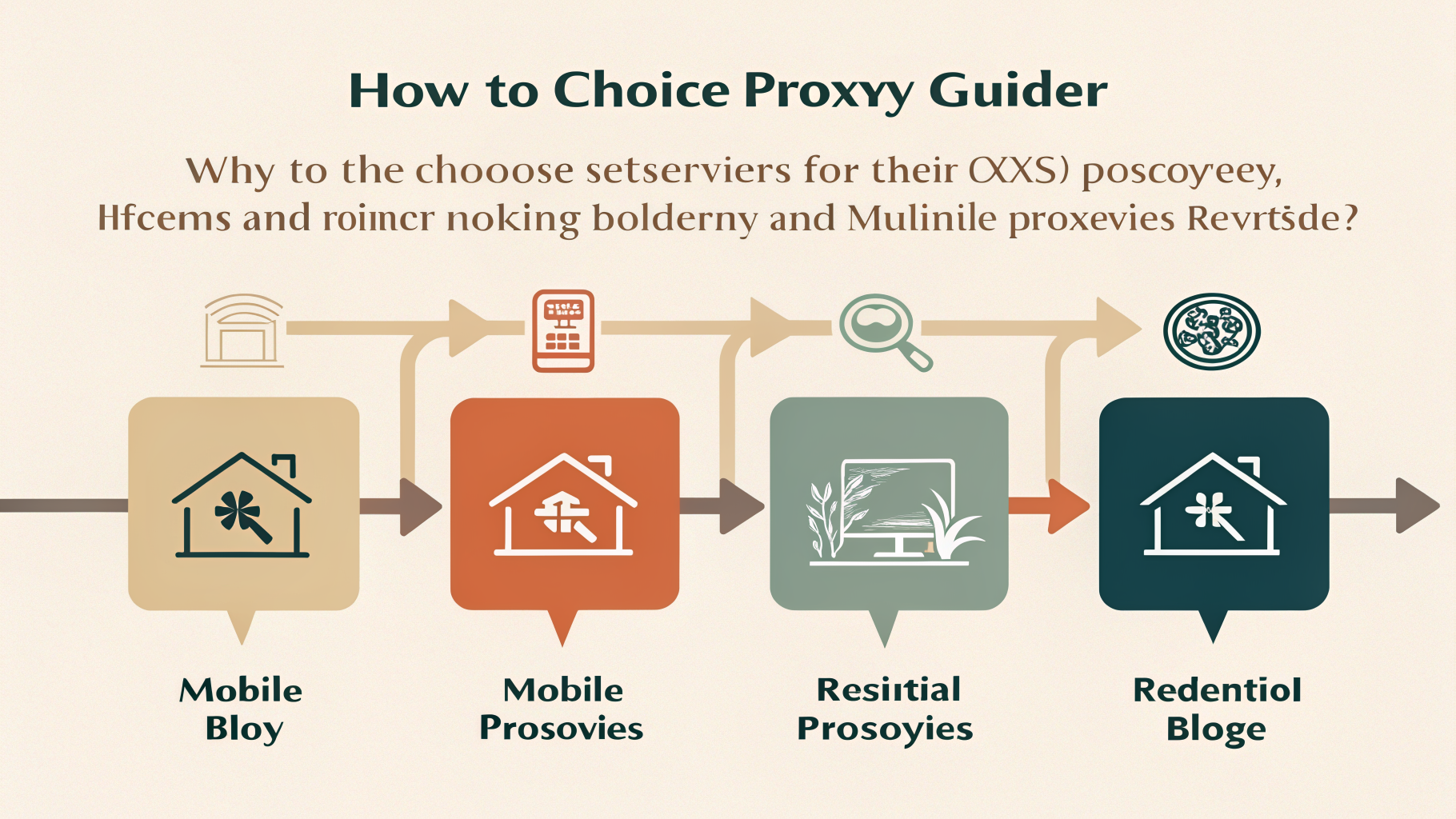
Questions to ask before you buy
- Is your target mainly a mobile-first platform or a general web workflow
- Do you need broad coverage or better trust quality in fewer lanes
- Are you trying to hold long sessions or refresh identity more naturally
- Is the current failure pattern caused by load, or by how the connection looks
- Will a more expensive proxy type reduce the hidden cost of retries and resets
If you answer those questions honestly, the mobile-versus-residential decision becomes much clearer.
What outside references can help frame the decision
Mobile and residential traffic behave differently because the underlying network context is different. GSMA provides a useful high-level view of how mobile networks and operators function at ecosystem level, while Mozilla’s MDN explains core HTTP request behavior and how connection context shapes request handling. Those references do not tell you which proxy to buy, but they help explain why connection origin changes outcomes.
If your workflow still leans toward fixed identity and long account continuity, you should also compare this article with our earlier guide on static residential proxies versus rotating residential proxies. That comparison helps separate rotation logic from origin-type logic so you do not mix two different buying decisions together.
Frequently asked questions
Are mobile proxies always safer than residential proxies
No. They are not universally safer or better. They are simply a better fit for some trust-sensitive workflows where mobile-origin traffic matters more.
Are residential proxies enough for most teams
Yes. For many teams, residential proxies are still the best starting point because they balance availability, coverage, and operating simplicity well.
Should I start with residential proxies before buying mobile proxies
Usually yes, unless you already know your workflow is blocked mainly by trust quality rather than scale or geography. Residential proxies are the easier baseline for most buyers.
Conclusion
Mobile proxies make more sense than residential proxies when your workflow depends more on connection trust quality, mobile-origin realism, and carrier-style session behavior than on broad coverage and straightforward scaling. Residential proxies still make more sense when you want wider inventory, simpler operations, and a more flexible baseline. The right choice is less about which proxy type sounds stronger and more about which one matches the pressure point in your workflow.